Up to 97%
Efficacy
High efficacy, ranging from 70% to 90%, was observed indoors during both medium and heavy pollution, while efficacy ranged from 70% to 97% outdoors.
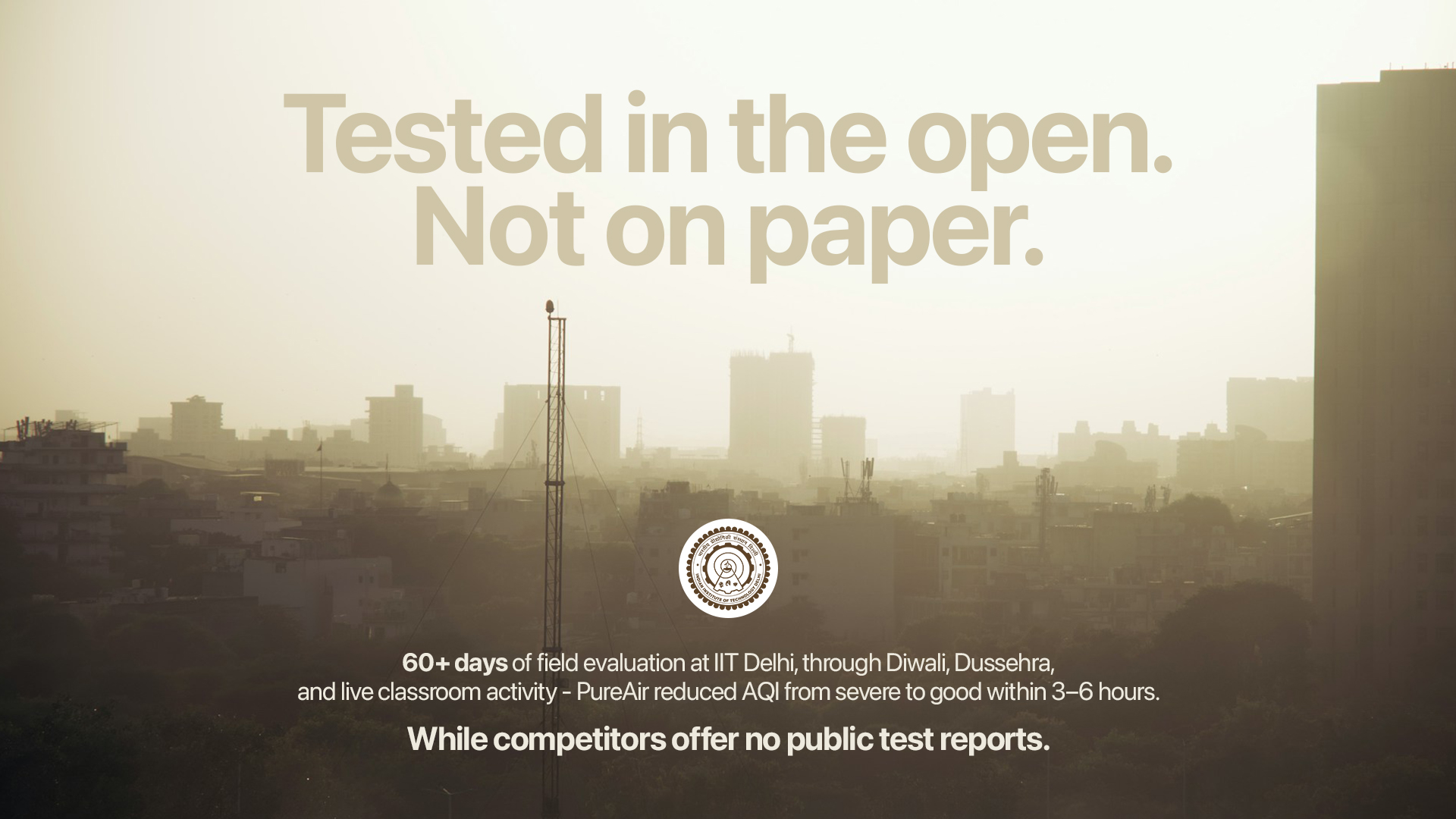
An independent IIT Delhi study tested MRH in real schools over 60 days, through Delhi’s worst air. The result: up to 90% fewer pollutants, indoors and out. No lab tricks, just measured proof.
Learn MoreWe design our products with the environment in mind. That starts by using recycled and responsibly sourced materials.
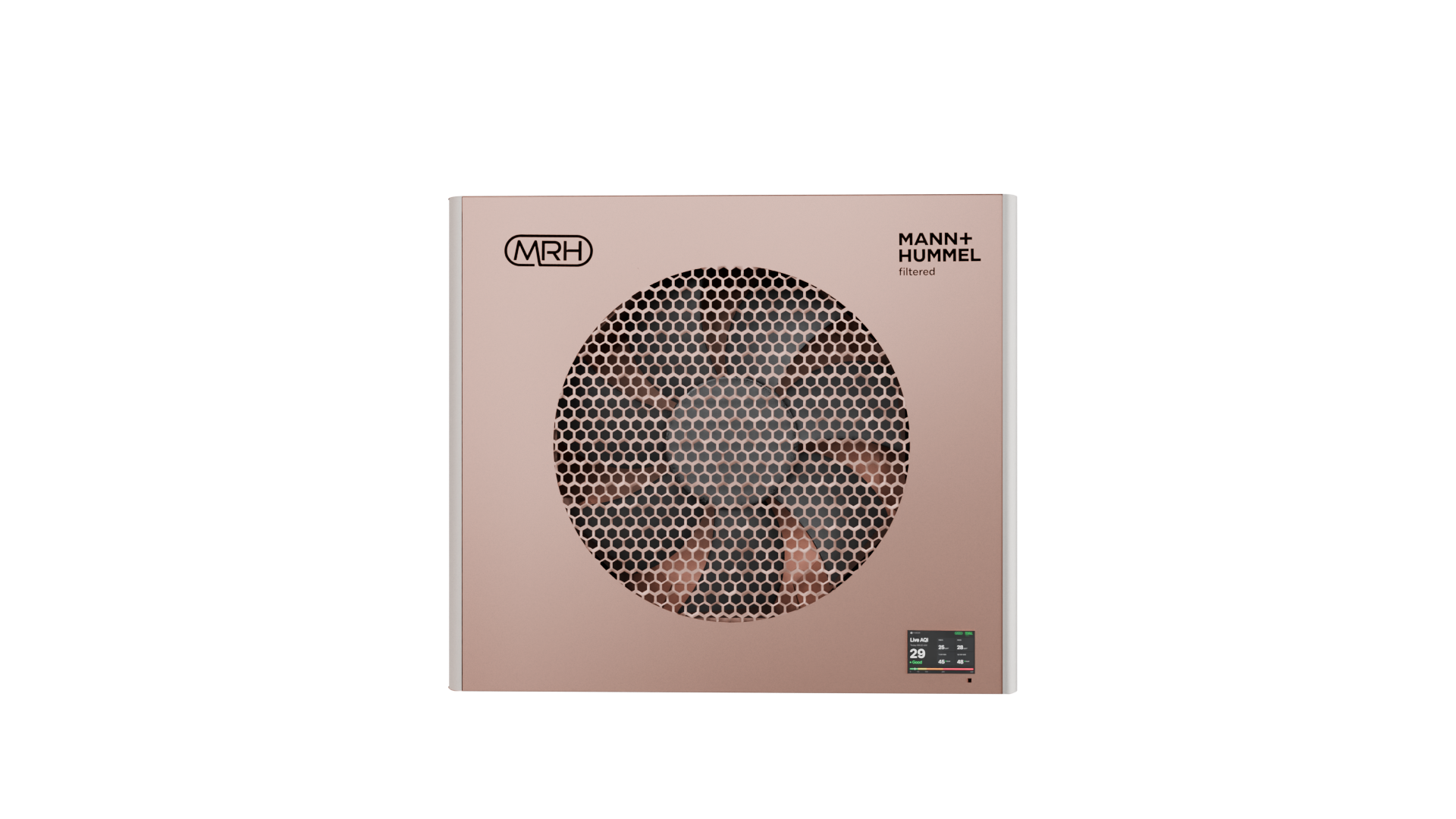
PureAir
of area coverage from a single unit — built for large, open indoor spaces.
filter efficiency, capturing fine particles down to 0.3 microns.
Clean Air Delivery Rate (CADR) for rapid, whole-room purification.
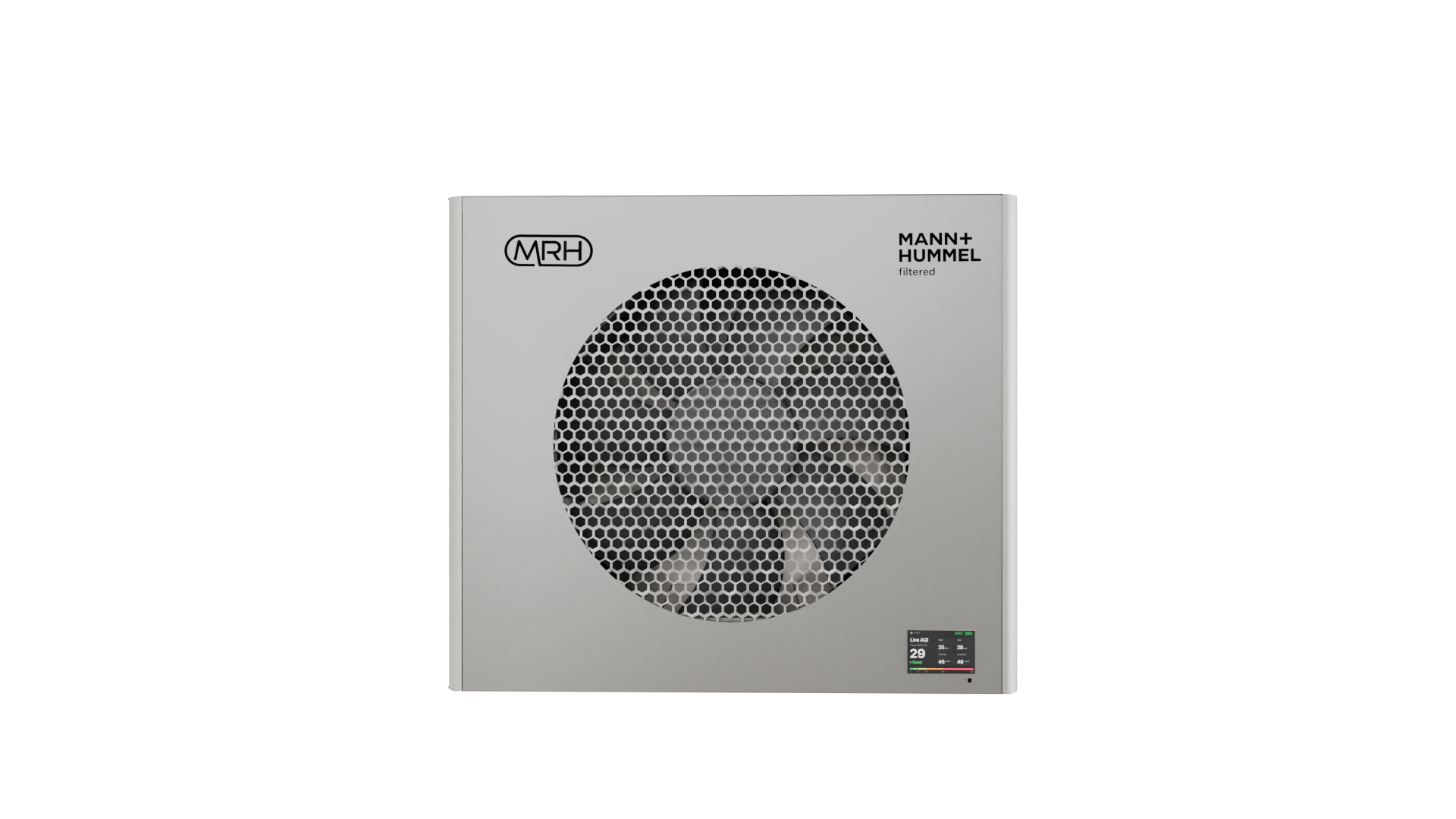
AirFINEry
of area coverage from a single unit — built for the largest open indoor spaces.
filter efficiency, capturing fine particles down to 0.3 microns.
Clean Air Delivery Rate (CADR) for rapid, whole-room purification.
Making products that last and can be recycled at their end of life helps protect the earth’s precious resources.
Up to 97%
Efficacy
High efficacy, ranging from 70% to 90%, was observed indoors during both medium and heavy pollution, while efficacy ranged from 70% to 97% outdoors.

~75% Fewer
Particles
A significant ~75% reduction in ultrafine, coarse particles, and others was observed within 3 to 6 hours in a naturally ventilated room with doors and windows open, and ongoing activities.

Below
20 µg/m³
After the reduction, the purifier can maintain safe levels and even reduce the concentration to below 20 µg/m³ (WHO recommended levels).

ISO 1000
Clean Room
Continuous use in a controlled environment can help achieve an ISO 1000 clean room standard (≤ 1000 particles/cm³) — ideal for highly sensitive spaces like operation theaters, labs, and ICUs.

Very Poor
to Good
AQI dropped from Very Poor to Good — the environment started at a Very Poor AQI (301–400) and improved to Good (0–50) after the purifier ran, with a substantial decrease in both particulate matter and particle number concentrations.

Strong Removal
Efficiency
Strong removal efficiency vs. no purifier — with the purifier: 66 ± 13% for ultrafine particles (PM0.1) and 83 ± 1% for fine particles (PM2.5). Without it, efficiency was much lower (22 ± 8% ultrafine, 51 ± 5% fine).

High Particle
Reduction
High particle reduction rates — reduction rate of 853 ± 636 particles/cm³/hr for ultrafine and 3,031 ± 918 particles/cm³/hr for fine particles, both significantly higher with the purifier running.
61% PM Mass
Reduction
Strong PM mass reduction — 61 ± 4% removal efficiency for PM mass with the purifier vs. only 15 ± 7% without, with removal rates up to 68 µg/m³ per hour.
Clean air shouldn’t be a privilege. We engineer it for classrooms, clinics, offices, and homes alike.
Learn moreEvery performance claim is independently tested and validated by IIT Delhi, never just marketed.
Learn moreFilter media engineered by MANN+HUMMEL, with 80 years of filtration science behind it.
Learn moreDesigned for India’s air, and built, serviced, and supported locally.
Learn moreLong-life filters and a metal unibody mean less waste and a lower cost to run.
Learn moreLive AQI and self-diagnostics keep every unit honest, in real time.
Learn moreUpdate
Apple accelerates progress with highest-ever recycled material in its products
April 16, 2026
Update
Apple launches new project to protect and restore California redwood forest
September 23, 2025